
Holiday Travel and Your Upper Neck: Simple Ways to Stay Comfortable
Thanksgiving travel can be full of meaningful moments, but hours in a car, on a plane, or away from your usual routine can leave your neck feeling tight and stiff. Small, conservative habits can help you protect comfort and mobility around the neck and upper cervical area while you travel. If discomfort persists or worsens, Owensboro Atlas Center can help you decide whether a professional evaluation is appropriate.
Why Travel Can Be Hard on Your Neck
Long periods of sitting often encourage the head to drift forward, especially when you are driving, looking down at a phone, or dozing in an unfamiliar seat. That position can place added demand on the muscles surrounding the neck, shoulders, and upper back.
Travel may also mean lifting luggage, sleeping on a different pillow, spending extra time on screens, and missing the movement routines that normally help you feel your best. For some clients, these changes can contribute to tension, reduced range of motion, or a sense of stiffness around the upper cervical spine.
If you already experience neck discomfort, headaches, migraines, jaw tension, or occasional arm and hand numbness, planning ahead may be especially worthwhile. The goal is not to make travel perfect; it is to give your body more support and avoid unnecessary strain.
Set Up Your Seat for Better Support
Whether you are driving across Kentucky or flying to visit family, begin with your seat setup. In the car, sit back fully in the seat rather than leaning forward toward the steering wheel. Adjust the headrest so the center of it is close to the middle of the back of your head, rather than sitting too low behind your neck.
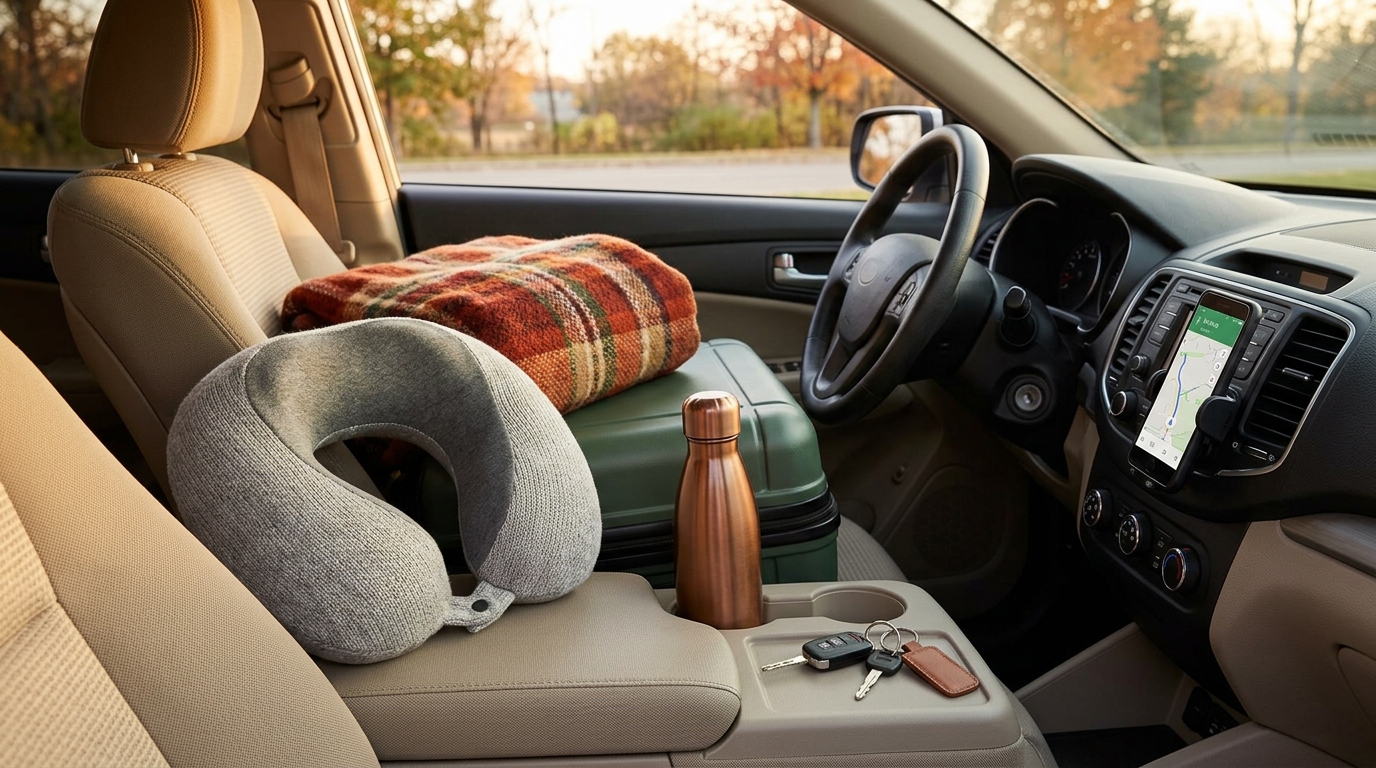
Move the seat so you can reach the pedals and steering wheel without locking your elbows or craning your head forward. On a flight, use the seatback and, if helpful, a small travel pillow that supports your neck without pushing your head far forward. Avoid twisting your neck to sleep against a window or armrest for long stretches.
Build Movement Breaks Into the Trip
Stillness is often more challenging than movement. On a road trip, plan brief stops to stand, walk, and gently move your shoulders every hour or two when practical. A few minutes of easy walking can help interrupt the rounded posture that tends to build during a long drive.
On a plane, change positions when you can, stand periodically if permitted, and perform gentle shoulder rolls or relaxed upper-back movements from your seat. Keep motions slow and comfortable. This is not the time for aggressive stretching or forcing your neck through a painful range of motion.
Pack and Lift With Care
Heavy or uneven bags can quickly aggravate the neck and shoulders. Pack lighter whenever possible, use rolling luggage, and divide heavier items between bags instead of carrying everything on one shoulder. When lifting a suitcase, bend through your hips and knees, keep the item close to your body, and avoid turning your torso while holding weight.
If a bag is too heavy or awkward, ask for help. A little assistance at the airport, hotel, or family gathering is often a better choice than straining to place a suitcase in an overhead compartment.
Keep Screens Closer to Eye Level
Holiday travel often comes with extra screen time: navigation, boarding information, messages, streaming, and photos with family. Looking down at a phone for extended periods can add to neck tension. When possible, raise your phone or tablet closer to eye level and take regular visual breaks.
If you are working remotely before leaving town, position your monitor so the top portion of the screen is near eye level. A supportive setup can reduce the urge to lean your head forward and may help protect more comfortable spinal alignment throughout the day.
Make Sleep Away From Home More Supportive
An unfamiliar mattress or pillow can change how your neck feels in the morning. If you can, bring a familiar travel pillow or choose a pillow that fills the space between your head and shoulders without bending your neck sharply upward or downward. Back and side sleeping positions are often easier to support than sleeping on your stomach, which can require prolonged neck rotation.
Try to keep your sleep position simple and supported. If you wake up stiff, give yourself time to move gently before rushing into lifting, driving, or other holiday activities.
Avoid Sudden Neck Self-Manipulation
When your neck feels restricted, it can be tempting to twist or crack it for quick relief. Sudden self-manipulation can be unpredictable, particularly when you are already sore, fatigued, or recovering from a long day of travel. Instead, choose gentle movement, comfortable positioning, hydration, and rest.
For clients seeking gentle chiropractic care in Owensboro, Kentucky, Owensboro Atlas Center takes a precision-based approach to upper cervical care. Dr. Kyle Wilgus will focus on helping clients understand structural and stability concerns rather than relying on forceful, generalized approaches.
When It Is Time to Seek an Evaluation
Temporary tightness after a trip may improve with rest, light movement, and a return to your regular routine. However, persistent, recurring, or worsening neck pain, reduced mobility, frequent headaches, jaw discomfort, tingling, or numbness may warrant a professional evaluation. This can be particularly important if symptoms affect your ability to sleep, work, drive, or enjoy time with family.
At Owensboro Atlas Center, a chiropractic consultation may include a detailed discussion of your concerns and a precision-based assessment. Depending on your needs, our approach may use tools such as infrared thermography, CBCT 3D spinal imaging, and cervical stability testing to better understand upper cervical structure and stability. These assessments help inform individualized care decisions, but they do not guarantee a particular outcome.
Seek prompt medical attention for a severe headache, new weakness or numbness, confusion, symptoms following a significant injury, or other sudden or concerning changes. These symptoms require timely medical evaluation and should not be managed through self-care alone.
Plan Ahead for a More Comfortable Trip
Thanksgiving travel does not have to mean accepting days of neck tension. Adjust your seat and headrest, take movement breaks, lighten your bags, raise your screens, and choose supportive sleeping positions whenever possible. Small decisions throughout the trip can make a meaningful difference in how your neck and upper body feel.
If you would like personalized guidance before you leave or support after you return, schedule a consultation with Owensboro Atlas Center in Owensboro, Kentucky. We are here to help you better understand your concerns and explore a thoughtful approach to upper cervical chiropractic care before or after holiday travel.
FAQ
Can a long drive cause neck stiffness?
Long drives can contribute to neck stiffness because they involve extended sitting, limited movement, and sustained attention toward the road. Poor headrest position, forward-head posture, and frequent phone use during stops may add to the strain.
How often should I take movement breaks on a road trip?
When practical, aim to stop every hour or two to stand and walk briefly. Even a few minutes of relaxed movement can help break up prolonged sitting and reduce the feeling of tension in the neck and shoulders.
What is the best sleep position for neck comfort while traveling?
Back and side sleeping are often easier to support because they can help keep the neck in a more neutral position. Choose a pillow that supports the space between your head and shoulders without forcing your neck into an awkward angle.
Should I crack my neck if it feels stiff after a flight?
It is best to avoid sudden self-manipulation of the neck, especially if you are in pain or feel restricted. Try gentle movement, rest, hydration, and supportive positioning instead. If symptoms continue or worsen, consider a professional evaluation.
When should I contact Owensboro Atlas Center after holiday travel?
Consider scheduling a consultation if neck discomfort, headaches, limited motion, jaw tension, tingling, or numbness persists or interferes with daily life. For severe headache, new weakness or numbness, confusion, or symptoms after a significant injury, seek prompt medical attention.